
Introduction
A calving season safari Africa is one of the most powerful wildlife experiences you can witness.
The sun rises over the endless plains of the Serengeti National Park.
Within minutes of being born, a tiny wildebeest struggles to stand. Its legs tremble, its world is unfamiliar, and the air is filled with movement. Around it, thousands of other calves are taking their first breath.
But here, standing still is not an option.
Somewhere in the distance, a lion is watching.
Welcome to calving season—where life begins, and survival is tested instantly.
What Is Calving Season Safari Africa?
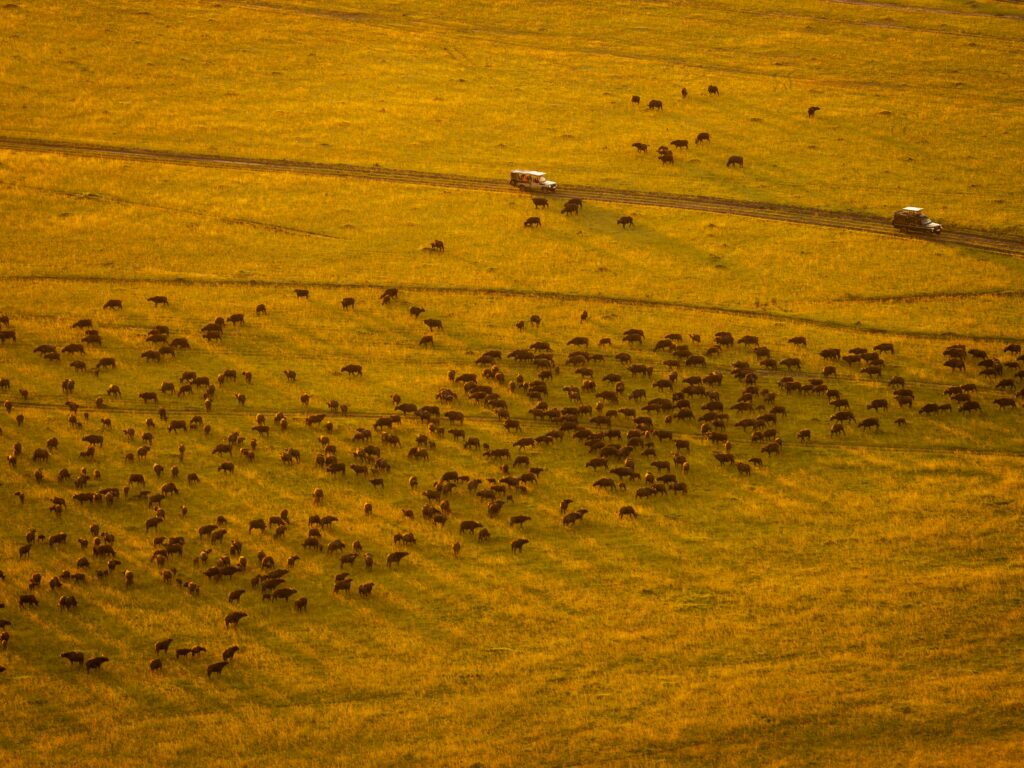
A calving season safari Africa is a key phase of the Great Migration, where hundreds of thousands of wildebeest give birth within a short period.
Between January and March, over 500,000 calves are born across the southern Serengeti plains.
This transforms the landscape into a vast nursery of new life—but it is also one of the most dangerous times to be born in the wild.
Where to Experience Calving Season Safari Africa
Calving season happens in the southern regions of the Serengeti National Park, especially:
- Ndutu region
- Ngorongoro Conservation Area
Unlike the river crossings in the Maasai Mara National Reserve, this part of the migration occurs entirely in Tanzania.
These nutrient-rich plains provide the perfect environment for both newborn calves and predators.
Why Calving Season Safari Africa Is So Dramatic
A calving season safari Africa is defined by urgency.
Within minutes, a calf must stand.
Within hours, it must run.
Predators such as lions, cheetahs, hyenas, and jackals follow closely, creating intense wildlife encounters.
Yet, survival is possible through a powerful natural strategy called predator swamping—where so many calves are born at once that predators cannot catch them all.
Why Calving Season Safari Africa Is a Hidden Gem
While many travelers focus on river crossings, a calving season safari Africa offers something deeper:
Unmatched Predator Action
Frequent and raw wildlife encounters, often in daylight.
Thousands of Baby Animals
From wildebeest to zebras and gazelles, the plains are full of life.
High Wildlife Density
Animals gather in large numbers, making sightings easier.
Stunning Green Landscapes
The rainy season transforms the Serengeti into a lush paradise.
Why Photographers Love Calving Season Safari Africa
A calving season safari Africa is a dream for photographers:
- Soft golden lighting
- Dramatic skies
- Intimate wildlife moments
- Fewer crowds compared to peak migration months
Best Time for Calving Season Safari Africa
The best time to experience a calving season safari Africa is:
- Late January to February (Peak)
- January to March (Full season)
Timing depends slightly on rainfall, but these months offer the most consistent sightings.
How Calving Season Fits the Migration Cycle
The Great Migration follows a yearly cycle:
- Jan–March → Calving (South Serengeti)
- April–June → Movement north
- July–October → River crossings
- Nov–Dec → Return south
Calving season marks the beginning of the entire migration cycle
More Than a Safari Experience
A calving season safari Africa is more than wildlife viewing.
It is witnessing life at its very beginning—the struggle, the instinct, and the resilience.
It is seeing beauty and danger exist side by side.
Plan Your Calving Season Safari Africa
If you’re looking for a safari that is:
- Authentic
- Less crowded
- Emotionally powerful
- Rich in wildlife
Then a calving season safari Africa is the perfect choice.

